The Science Behind Meditation
How Meditation Supports Emotional Regulation and Nervous System Balance
Meditation is often thought of as a relaxation practice, but research shows it can support much more than a moment of calm. Studies in neuroscience suggest that regular mindfulness meditation can influence how the brain and nervous system respond to stress, supporting emotional regulation and overall wellbeing.¹ ²
At State of Harmony, we see this shift gently unfold in our guided meditation classes in Glen Iris, Melbourne. People arrive feeling overwhelmed, tense, or mentally busy, and leave feeling more settled, grounded, and emotionally steady. These experiences are supported by a growing body of research into how meditation affects the brain and body.¹
Let’s explore how meditation supports emotional balance from a scientific perspective.
What Is Emotional Regulation?
Emotional regulation is the ability to notice, understand, and respond to emotions in a balanced way. It does not mean suppressing feelings or trying to stay calm all the time. Instead, it involves becoming aware of emotions as they arise and having more choice in how you respond.
When emotional regulation is supported, you may notice:
Less reactivity to stress
Greater emotional clarity
More space between feeling and action
A growing sense of steadiness in daily life
Meditation helps build this capacity by strengthening awareness and calming the body’s stress response.²
How Stress Affects the Nervous System
When something feels overwhelming, the nervous system activates a stress response often called “fight or flight.” Heart rate increases, breathing becomes shallow, and the mind scans for danger. This response is designed to protect us, but when triggered too often, it can leave us feeling anxious, tense, or emotionally overloaded.
Over time, chronic stress can make the nervous system more reactive, meaning smaller challenges feel bigger and emotions feel harder to manage. Meditation offers a gentle way to help the nervous system shift out of this constant alert state.²
The Neuroscience of Meditation
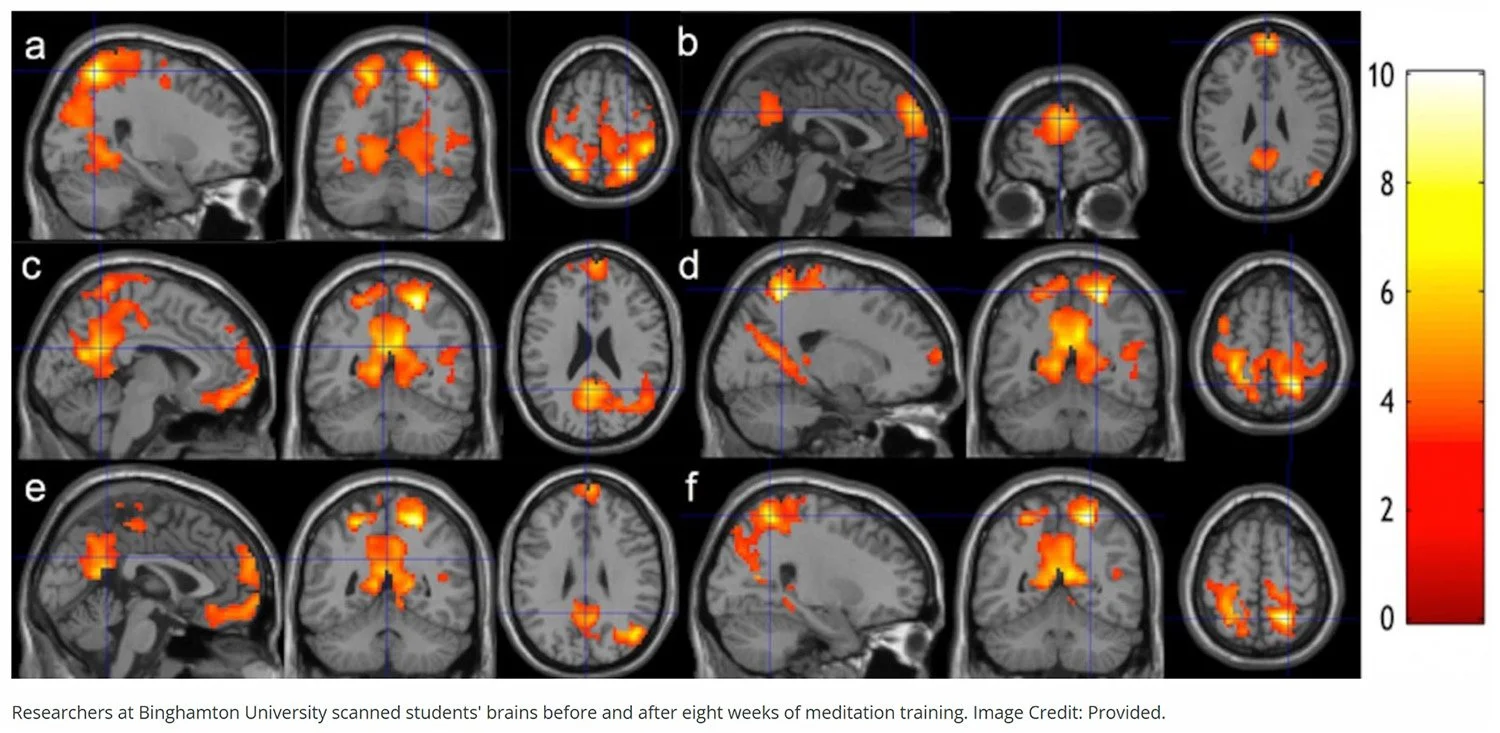
Brain imaging research shows that meditation can influence areas of the brain involved in attention, emotional processing, and self-awareness, with studies observing both structural and functional changes in networks related to emotional regulation and stress response.¹ ² ⁴
Regular mindfulness practice has been associated with:
Increased activity in regions linked to emotional regulation¹
Improved connection between thinking and feeling centres of the brain²
Reduced reactivity in stress-related brain circuits⁴
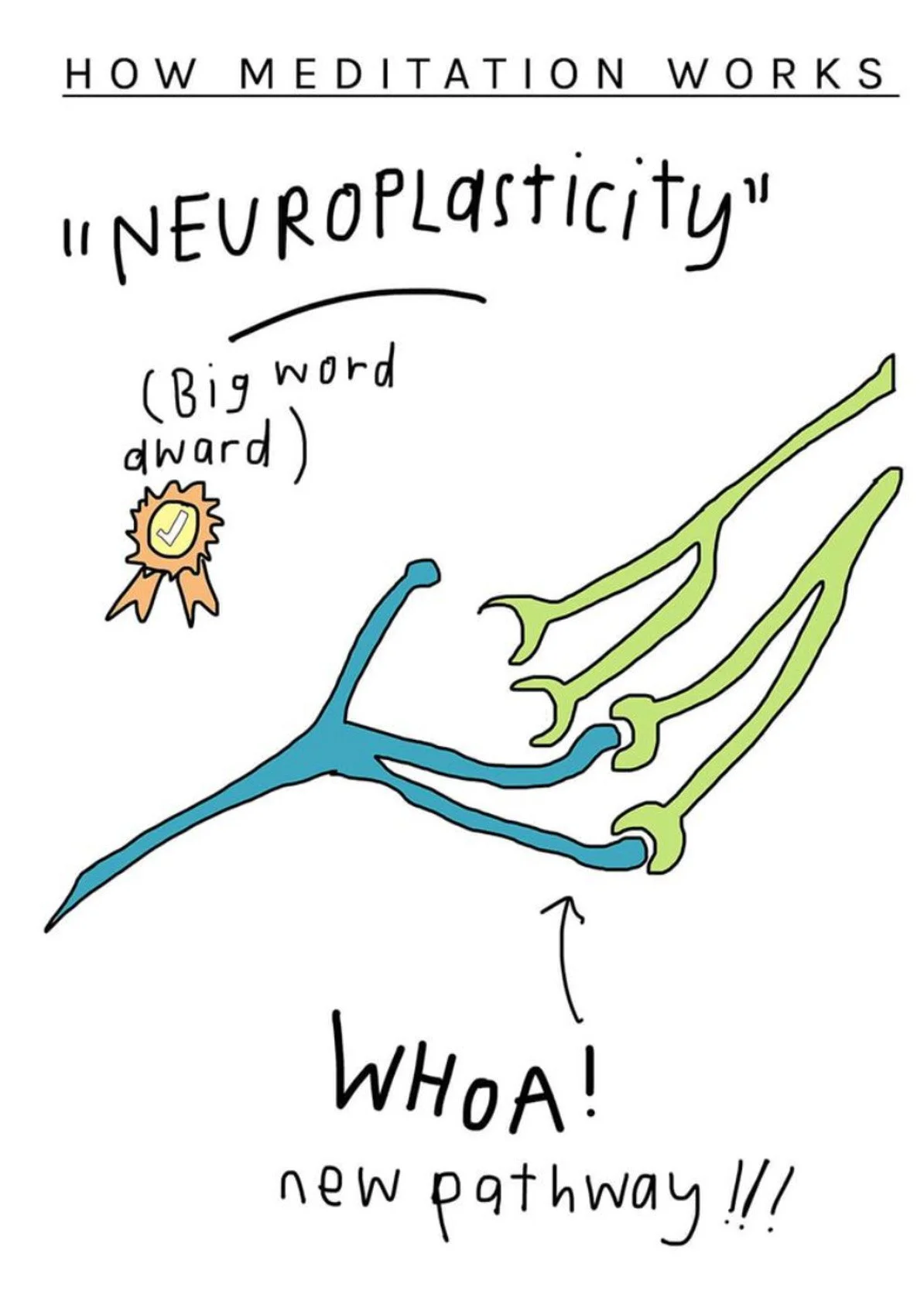
Neuroimaging studies have observed changes in areas such as the amygdala, hippocampus, and prefrontal cortex, which play important roles in stress response, memory, and emotional regulation. Research also suggests that mindfulness training may support neuroplasticity, the brain’s ability to adapt and form new patterns over time.¹ ² ³
In addition, studies examining stress-related brain activity have found that mindfulness meditation training may alter functional connectivity in the amygdala, a region strongly involved in processing stress and emotional reactions. These changes are associated with improved emotional regulation and reduced stress reactivity.⁴
This means that with practice, the brain becomes better at noticing emotions without being overwhelmed by them. Instead of being pulled immediately into stress or rumination, there is more capacity to pause, observe, and respond with greater clarity.
Meditation and Nervous System Regulation
Meditation does not just influence the brain. It also supports the nervous system.
Mindfulness practices that focus on breath, body awareness, and present-moment attention can help activate the body’s natural “rest and restore” response. This balances the stress response and supports a sense of safety in the body.²
When the nervous system feels safer, emotional regulation becomes easier. Emotions still arise, but they move through more smoothly. There is less spiralling, less gripping, and more steadiness.
From Reaction to Response
One of the most powerful effects of meditation is the creation of space.
In that space between stimulus and response, you might notice:
The emotion arising in the body
The thoughts connected to it
The urge to react
Instead of being carried away, you learn to stay present. That small pause allows for choice. This is emotional regulation in action.²
Meditation is not about controlling emotions. It is about learning how to meet them with awareness and compassion.
Meditation for Emotional Wellbeing in Daily Life
These changes extend far beyond the meditation cushion. With regular practice, many people notice:
Greater patience in difficult conversations
More ease during stressful days
A softer inner dialogue
Improved focus and mental clarity¹
Meditation becomes a practical tool for navigating real life, not an escape from it.
Meditation Classes in Melbourne at State of Harmony
At State of Harmony, meditation is offered as a gentle, supportive practice that honours the nervous system and the pace of each individual.
You can join us for:
Weekly Wednesday Meditation Circle
A midweek pause to settle your nervous system and reconnect with yourself
Learn more about our meditation
Monthly Sacred Sunday Immersion
A longer, nourishing session combining gentle mindful movement, meditation, and sound healing
Whether you are new to meditation or returning to your practice, you are warmly welcome.
A Gentle Path Toward Emotional Balance
Meditation does not remove life’s challenges. Instead, it helps you relate to them differently. With practice, emotions feel less overwhelming, stress becomes more manageable, and there is a growing sense of inner steadiness.¹ ²
If you are looking for meditation in Glen Iris or Melbourne to support emotional wellbeing, we would love to welcome you at State of Harmony.
Ready to begin? Explore upcoming meditation sessions at State of Harmony
With warmth and gratitude,
Sithara
References
Hölzel, B. K., et al. (2011). Mindfulness practice leads to increases in regional brain gray matter density. Psychiatry Research: Neuroimaging, 191(1), 36–43.
Tang, Y. Y., Hölzel, B. K., & Posner, M. I. (2015). The neuroscience of mindfulness meditation. Nature Reviews Neuroscience, 16, 213–225.
Lazar, S. W., et al. (2005). Meditation experience is associated with increased cortical thickness. NeuroReport, 16(17), 1893–1897.
Taren, A. A., et al. (2015). Mindfulness meditation training alters stress-related amygdala functional connectivity. Social Cognitive and Affective Neuroscience, 10(12), 1758–1768.