Part 1: AI and the Brain: Are We Outsourcing Too Much of Our Thinking?
AI has become part of everyday life remarkably quickly.
We use it to write emails, summarise information, plan holidays, solve problems, generate ideas and find answers almost instantly.
And I’ll be the first to say that I use it too - although I’m not particularly tech-savvy, so I’m sure I’m only scratching the surface of what it can actually do.
I’ve found it incredibly helpful for organising information, working through ideas and making some everyday tasks easier.
But recently, I’ve also found myself wondering:
What happens when we begin outsourcing not just tasks, but some of our thinking?
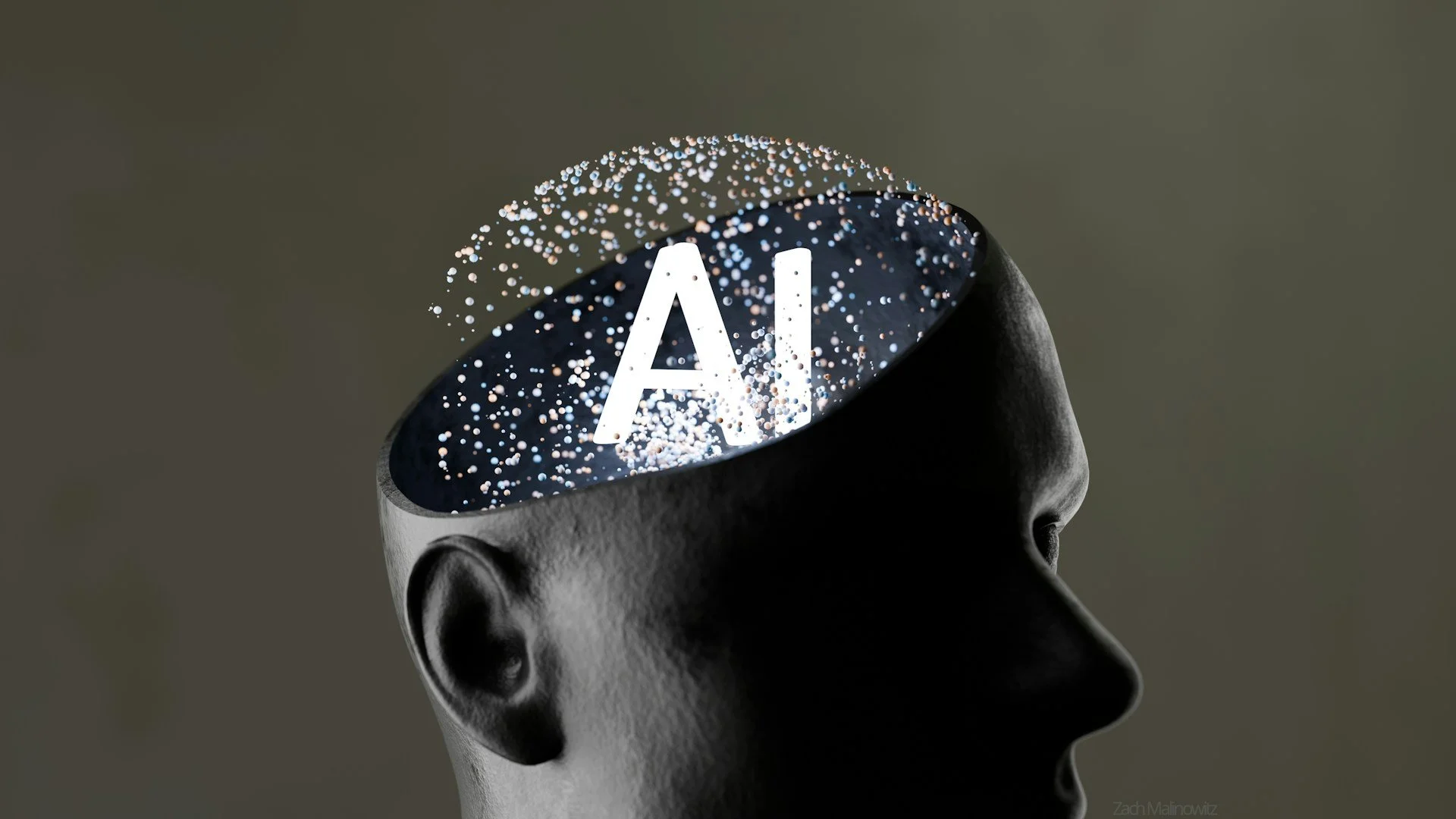
We Have Always Outsourced Some of Our Thinking
Human beings have always found ways to reduce the amount of information we need to hold in our minds.
We write shopping lists, we put appointments into calendars, we use calculators, we rely on GPS rather than remembering every street and turn.
This is sometimes described as cognitive offloading - using something outside ourselves to reduce the cognitive work we need to do.
And cognitive offloading isn’t necessarily a bad thing. Often, it is incredibly useful. Technology can free up time and mental capacity for the things that matter more.
But AI feels slightly different because we can now outsource tasks that once required much more active involvement from us.
Writing, synthesising, generating ideas, problem-solving, even forming an argument or deciding how to communicate something.
And researchers are beginning to ask what that might mean for the way we use our own cognitive abilities.
What Is the Research Telling Us?
One widely discussed study from MIT Media Lab looked at people writing essays in three different ways: using an AI language model, using a search engine, or working without either.
The researchers used EEG to examine patterns of brain activity during the task.
Participants working without external assistance showed stronger and more distributed patterns of brain connectivity than those using AI. The AI-assisted group also showed lower recall of parts of what they had written and reported less sense of ownership over their essays. It is fascinating research.
But it is also important to keep it in perspective. The study was relatively small, looked at a particular type of writing task, and the initial research was not yet peer-reviewed when much of the media coverage appeared.
It does not tell us that AI is damaging our brains or making us less intelligent.
In fact, the researchers themselves have cautioned against sensational interpretations of their work. Other researchers are now designing controlled studies specifically looking at generative AI, cognitive effort and analytical writing. So the evidence is still developing.
For me, the most interesting part isn't a frightening headline. It is the question underneath it:
If a tool does more of the cognitive work for us, what happens to the parts of thinking we practise less?
“Think for Me” or “Help Me Think”?
This may be the distinction I find most useful. There is a difference between: Think for me and Help me think.
Imagine I have something difficult to write. I could ask AI to generate the entire piece, accept the answer and move on. Or I could spend some time thinking first.
What do I believe? What am I trying to say? What feels important here?
I might jot down my own thoughts and then use AI to help organise them, challenge an assumption, explain something I don’t understand or show me another perspective.
The technology is still helping me. But I am still participating in the thinking. And perhaps that matters, because some of the effort involved in forming an idea, questioning it and finding our own words may be part of how we learn and understand more deeply.
AI Is Not the Enemy
I don't think this conversation needs to become anti-AI. AI is here, and there are many ways it can genuinely support our lives, our work and our learning.
Perhaps the more useful question is: What would a balanced relationship with AI look like?
There will be times when efficiency is exactly what we need. And there may be other times when it is worth pausing before reaching for the quickest answer.
Perhaps asking:
What do I already know?
What do I think?
Could I sit with this for a moment first?
We don't need to do this every time. This isn't about creating another rule or another thing to get right. It is simply about becoming more conscious of when technology is supporting our thinking and when it may be replacing a process we still value practising ourselves.
And This Is Where Mindfulness Became Interesting to Me
The more I read about AI and cognition, the more I found myself thinking about mindfulness.
Not because meditation is somehow the antidote to AI. And certainly not because we need to disconnect from technology completely.
But because mindfulness asks us to practise many of the things modern life can make easy to bypass. Attention, awareness, curiosity, reflection, sitting with uncertainty.
And perhaps most importantly, noticing when we are operating automatically and creating enough space to choose what happens next.
That is what I’ll explore in Part 2:
Mindfulness in the Age of AI: Staying Connected to Our Own Minds.
Because perhaps the question is not whether technology will become more capable. It almost certainly will.
The question may be how we remain active participants in our own thinking as it does.
With warmth and gratitude,
Sithara
-
Harvard Gazette - Is AI Dulling Our Minds?
A thoughtful discussion with Harvard academics exploring both the opportunities and concerns around AI, learning and critical thinking.
Read the Harvard Gazette articleMIT Media Lab - AI and the Brain
An overview of MIT Media Lab research examining AI use, attention, memory, engagement and brain activity.
Explore MIT Media Lab's AI and the Brain researchChen et al. (2025) - Effects of generative artificial intelligence on cognitive effort and task performance
A published study protocol for a randomised controlled experiment examining generative AI, cognitive effort and analytical writing. The article describes the planned research rather than completed trial results.
Read the study protocolABC Radio National, All in the Mind - Is AI Making Our Brains Lazier?
A conversation with cognitive neuroscientist Professor Joel Pearson about cognitive offloading, adaptability and how we may respond to an increasingly AI-supported world.
Listen on ABC