Yoga Nidra: The Practice of Deep Rest, Nervous System Regulation and Returning to Yourself
There are times when sleep alone doesn’t feel like enough.
Your body may be tired, but your mind keeps moving. You lie down at night and thoughts begin to circle. Or you move through the week carrying a subtle sense of tension, even when nothing is urgently wrong.
For many of us, rest has become something we squeeze in only after everything else is done. But deep rest is not a luxury. It is part of how the body restores, recalibrates and reconnects.
Yoga Nidra offers a gentle way to enter that kind of rest.
Often translated as “yogic sleep,” Yoga Nidra is a guided meditation practice where the body is invited into deep relaxation while awareness remains softly present. It is usually practised lying down, with no movement required. You are guided through stages such as settling the body, noticing sensations, breath awareness, body scanning, visualisation or intention setting.
Unlike ordinary sleep, Yoga Nidra is not about becoming unconscious. It is a practice of resting deeply while staying gently aware.
What Is Yoga Nidra?
Yoga Nidra is a structured guided meditation practice that supports deep physical, mental and emotional relaxation. The Sanskrit word nidra means sleep, but Yoga Nidra is not simply a nap. It is often described as a state between waking and sleeping, where the body rests deeply and the mind is guided into a quieter, more receptive state.
A review on the origins and clinical relevance of Yoga Nidra describes the practice as promoting “a profound state of relaxation” that differs from sleep because there remains some awareness of one’s surroundings. (PubMed)
In a typical Yoga Nidra practice, you may be invited to:
settle into a comfortable lying position
setting an intention, also known as a sankalpa
Rotating attention through the body
noticing the breath and the subtle movement of the body as you breathe
becoming aware of opposite sensations or experiences, such as heaviness and lightness, warmth and coolness, effort and ease
exploring visualisations or imagery
rest in stillness before slowly returning
There is no right way to experience Yoga Nidra. Some people remain awake and aware the whole time. Some drift in and out. Some feel deeply relaxed, while others simply notice how tired they are. All of this can be part of the practice.
A Brief History of Yoga Nidra
Yoga Nidra has roots in ancient yogic traditions, where practices of sense withdrawal, inner awareness and deep meditative absorption were explored.
The modern guided practice many people know today is often associated with Swami Satyananda Saraswati, who helped systematise and popularise Yoga Nidra in the twentieth century. The Sleep Foundation notes that while Yoga Nidra has ancient roots, it was introduced more publicly in the 1960s through the writings of Swami Satyananda Saraswati. (Sleep Foundation)
Modern Yoga Nidra often draws on elements such as body awareness, breath awareness, intention, visualisation and the systematic rotation of consciousness through the body. Yoga Nidra can also include a sankalpa, or heartfelt intention, offered when the mind is calm and receptive.
Over time, Yoga Nidra has moved beyond traditional yoga settings and is now used in meditation, therapeutic, wellbeing and nervous-system regulation spaces. It is often practised by people who feel exhausted or overstimulated, or those seeking a more accessible way to rest.
Why Yoga Nidra Feels So Restorative
Many people come to Yoga Nidra because they feel tired but wired.
This is a familiar modern pattern. The body is exhausted, but the nervous system is still alert. The mind keeps planning, replaying, remembering or anticipating. Even when we stop physically, we may not feel internally settled.
Yoga Nidra offers a different pathway into rest. Because the practice is guided, you do not have to “clear your mind” or meditate perfectly. You are invited to follow the voice, return to the body, and let awareness move gently from one point of focus to the next.
This can help create a sense of safety and containment. Instead of forcing the body to relax, Yoga Nidra gently invites the body to notice that it is allowed to soften.
What Does the Evidence Say About Yoga Nidra?
While Yoga Nidra has ancient roots, modern research is beginning to explore how it may support stress reduction, sleep, mental wellbeing and physiological relaxation.
A large systematic review and meta-analysis examined Yoga Nidra’s effects on stress, anxiety and depression. The review included 73 studies and 5,201 participants and reported beneficial effects across these areas. The authors also noted that future high-quality studies are needed, so the evidence is promising but should still be interpreted with care. (PubMed)
Yoga Nidra has also been studied in relation to sleep. A systematic review on Yoga Nidra for sleep disorders evaluated its use across diverse populations, and early clinical studies suggest Yoga Nidra may be feasible and well tolerated for people experiencing insomnia. (PubMed)
The Sleep Foundation describes Yoga Nidra as an accessible form of meditative yoga that may support sleep by encouraging calmness, reducing stress and helping shift the body toward parasympathetic, or “rest and restore,” nervous system activity. (Sleep Foundation)
There is also emerging research on physical health markers. A 2024 systematic review and meta-analysis on Yoga Nidra for hypertension found evidence suggesting it may be a helpful complementary practice for blood pressure management, while also highlighting the need for more rigorous studies. (PubMed)
A broader integrative review of published Yoga Nidra research found that the practice has been explored across a range of health and wellbeing settings, while again emphasising the need for stronger study designs and clearer reporting. (PubMed)
So, while Yoga Nidra should not be presented as a cure or replacement for medical or psychological care, the current evidence suggests it may be a valuable complementary practice for supporting rest, relaxation, sleep quality, stress reduction and nervous system regulation.
Potential Benefits of Yoga Nidra
1. Stress reduction
Yoga Nidra may help reduce stress by giving the body repeated cues of safety. You are lying down, supported, guided and not required to perform.
Rather than trying to think your way into calm, Yoga Nidra works through the body. The practice invites awareness into physical sensation, breath and rest. This can help soften the constant mental activity that often accompanies stress.
Research suggests Yoga Nidra may support reductions in stress, anxiety and depression, though the quality of studies varies and more rigorous research is still needed. (PubMed)
2. Improved sleep quality
Yoga Nidra is not the same as sleep, but it may support the conditions that make sleep easier.
For people who struggle to switch off, Yoga Nidra can become a gentle bridge between the activity of the day and the restfulness of evening. The Sleep Foundation notes that Yoga Nidra may help people fall asleep faster and experience better sleep quality, partly by reducing stress and supporting parasympathetic nervous system activity. (Sleep Foundation)
This can be especially helpful for those who feel tired but wired, where the body is asking for rest but the mind remains active.
3. Nervous system regulation
Yoga Nidra is often used as a way to support nervous system regulation because it encourages stillness, breath awareness, body awareness and reduced hyperarousal.
In simple terms, the body is given repeated reminders that it is safe to soften.
This does not mean every practice will feel peaceful. Sometimes, when we finally slow down, we notice the tension, grief, fatigue or emotion that has been sitting beneath the surface. A trauma-sensitive approach recognises this and keeps the practice invitational.
You are always allowed to adjust, open your eyes, move, pause or return to a grounding anchor.
4. Emotional steadiness
Yoga Nidra may support emotional balance by creating space between you and your thoughts or feelings.
Rather than pushing emotions away, the practice invites a softer relationship with what is present. You may notice sensations, memories, emotions or thoughts arise, without needing to follow them, fix them or judge them.
For some people, this feels like quietening. For others, it feels like finally having space to exhale.
Over time, Yoga Nidra can become a practice of meeting yourself with less pressure and more compassion.
5. Accessible rest for busy lives
One of the beautiful things about Yoga Nidra is its accessibility.
You do not need flexibility, fitness, yoga experience or meditation experience. You do not need to sit upright or hold a pose. You simply lie down, get comfortable, and allow yourself to be guided.
For people who feel they are always “on,” this can be a powerful shift.
Is Yoga Nidra the Same as Meditation?
Yoga Nidra is a form of guided meditation, but it can feel different from other meditation practices.
In mindfulness meditation, you may be invited to stay with the breath, sounds, sensations or open awareness. In Yoga Nidra, the guidance is usually more structured. The attention is moved through different stages, such as body awareness, breath, sensation, imagery and stillness.
This structure can be helpful and you do not need to be “good at meditation” to benefit from Yoga Nidra.
What to Expect in a Yoga Nidra Practice
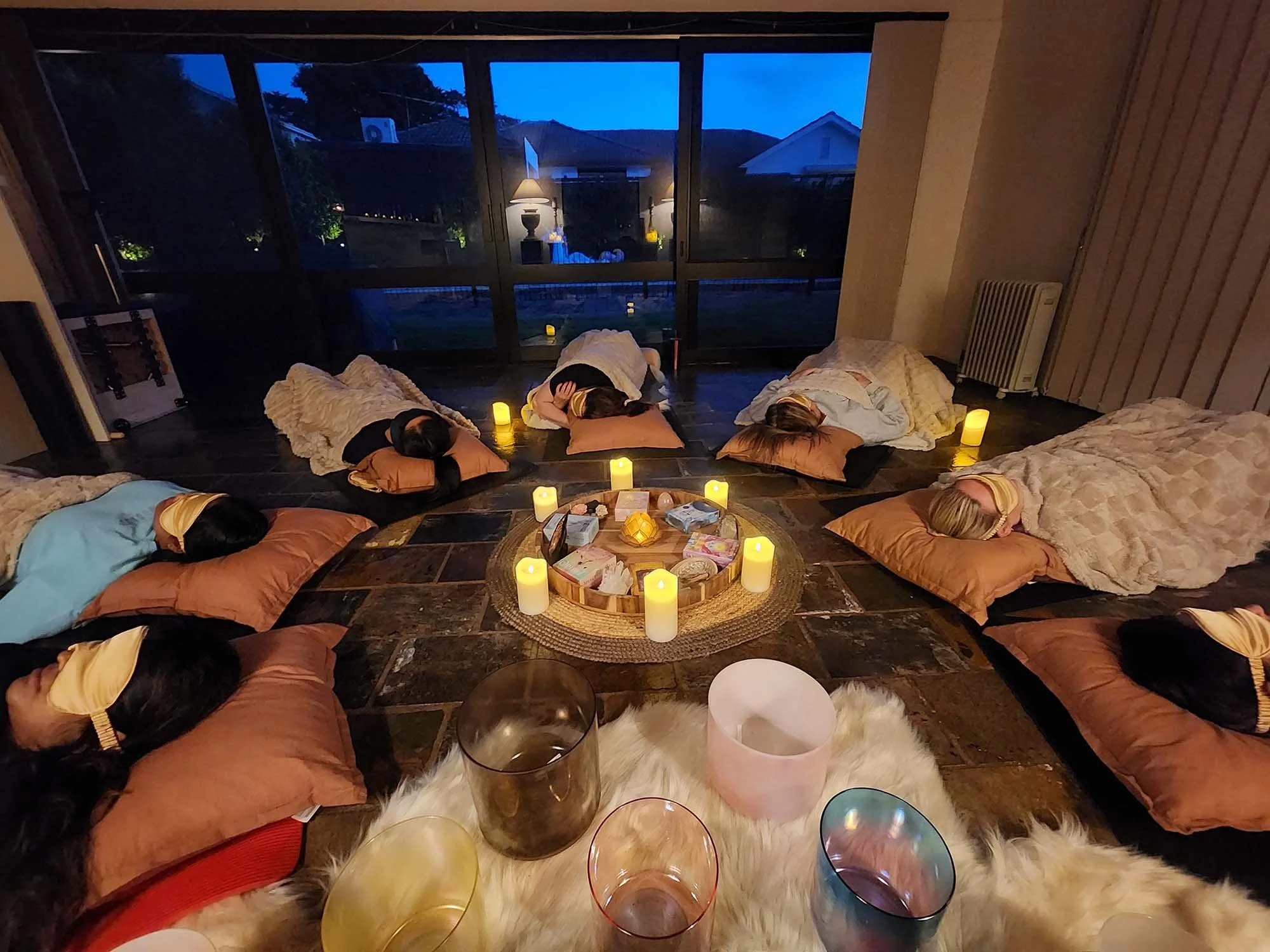
In a Yoga Nidra session, you will usually lie down on a mat with props, blankets and support so your body can feel comfortable. The environment is often quiet, dimly lit and calming.
You may be guided to:
arriving, settling and setting an intention, also known as a sankalpa
bringing awareness to the physical body
noticing the breath
becoming aware of opposite sensations or experiences, such as heaviness and lightness, warmth and coolness, effort and ease
exploring visualisations or imagery
resting in spacious stillness, without needing to do anything
slowly returning to the room, the body and the present moment
At State of Harmony, Yoga Nidra is offered in a gentle, grounded and trauma-sensitive way. There is no pressure to have a particular experience. You are welcome to rest, drift, listen, notice, or simply be.
Yoga Nidra and Sound
When Yoga Nidra is paired with sound bowls, the experience can feel even more spacious.
The guided practice supports the mind and body to settle, while the sound bowls create a soothing sensory environment. The tones and vibrations can offer another point of focus, helping the body soften into stillness.
This combination is especially supportive for people who find silence difficult or who benefit from a calming external anchor.
An Invitation to Return to Harmony
If you have been feeling tired, overstimulated, mentally busy or in need of deeper rest, you are warmly invited to join Return to Harmony.
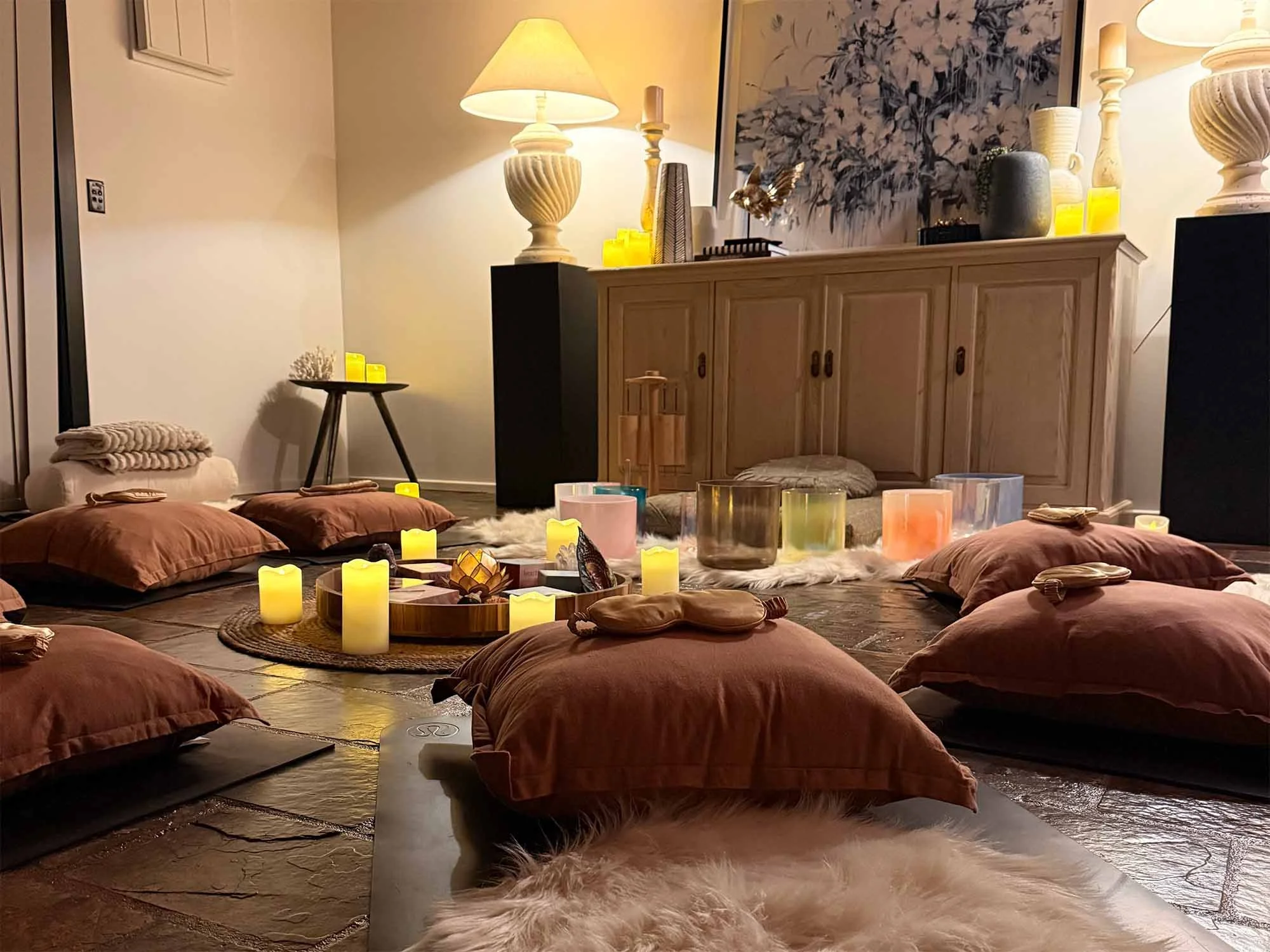
Return to Harmony is a deeply restorative Yoga Nidra and sound experience at State of Harmony in Glen Iris. This session is designed to support rest, nervous system regulation and self-connection through guided relaxation, stillness and the soothing resonance of sound bowls.
You do not need any meditation or yoga experience. There is nothing to perform, achieve or get right. You are invited to lie down, be supported, and allow yourself to receive the kind of rest your body may have been craving.
Book your place for Return to Harmony through the Events page.
A Gentle Closing Reflection
In a world that often asks us to keep going, Yoga Nidra offers a quiet reminder that rest is not something we have to earn.
Sometimes the most nourishing thing we can do is pause, lie down, soften our effort and allow ourselves to be supported.
Yoga Nidra invites us to return to the body, to listen beneath the noise, and to reconnect with the part of ourselves that is still, steady and whole. It is not about doing the practice perfectly. It is about creating space to come back to yourself with kindness.
Whether you are feeling tired, overwhelmed, emotionally full, or simply in need of a deeper exhale, Yoga Nidra can be a beautiful practice of restoration.
You are warmly invited to experience this for yourself at Return to Harmony, a restorative Yoga Nidra and sound experience at State of Harmony in Glen Iris.
With warmth and gratitude,
Sithara
-
For those interested in the research behind Yoga Nidra, the following articles offer helpful starting points:
Sleep Foundation: Yoga Nidra for Sleep
A clear, accessible overview of Yoga Nidra, sleep, relaxation and nervous system effects. (Sleep Foundation)Effects of Yoga Nidra on Stress, Anxiety and Depression: A Systematic Review and Meta-Analysis
A large review of 73 studies exploring Yoga Nidra’s effects on stress, anxiety and depression. (PubMed)Yoga Nidra for Hypertension: A Systematic Review and Meta-Analysis
A review exploring Yoga Nidra as a complementary practice for blood pressure and cardiovascular health. (PubMed)Efficacy of Yoga Nidra in Managing Sleep Disorders: A Systematic Review
A review exploring Yoga Nidra’s possible role in supporting sleep across different populations. (PubMed)A Closer Look at Yoga Nidra: Early Randomized Sleep Lab Trial
A preliminary clinical trial looking at feasibility and physiological responses in adults reporting insomnia. (PMC)Exploring the Uses of Yoga Nidra: An Integrative Review
A broader review of published research using Yoga Nidra as an intervention across different health and wellbeing contexts. (PubMed)The Origin and Clinical Relevance of Yoga Nidra
A useful article for the historical and clinical context of Yoga Nidra. (PubMed)