I Teach Mindfulness. I Still Overthink Things. Why Mindfulness Isn't About Stopping Thoughts
Recently, I noticed a familiar pattern in myself.
After one of my meditation classes, I found my mind replaying parts of the evening.
Thinking about what I could have done differently.
Wondering whether everyone enjoyed it.
Considering how I might improve it next time.
On the surface, it seemed productive.
After all, reflection can be helpful. It helps us learn, grow, and refine what we do.
But as I sat with it, I realised something important.
I wasn't reflecting anymore.
I was analysing.

Reflection vs Overthinking: What's the Difference?
There's a subtle difference between reflection and overthinking.
Reflection feels open and curious. It creates space for learning. It allows us to acknowledge what went well, what didn't, and what we might do differently next time.
Analysis, at least for me, can feel quite different.
It can become an attempt to control an outcome that has already passed.
It can become a way of searching for certainty where certainty doesn't exist.
It can become a form of self-protection.
If I think about it enough, perhaps I can prevent mistakes.
If I review every detail, perhaps I can guarantee a better outcome next time.
Except life doesn't work that way.
No amount of thinking can change what has already happened.
And no amount of planning can completely eliminate uncertainty.
A Mindfulness Teacher Who Still Overthinks
The irony wasn't lost on me.
I teach mindfulness.
I guide people in practices that encourage presence, acceptance, and letting go.
Yet here I was, caught in the same very human tendency that so many of us experience.
The more I teach mindfulness, the more I realise that mindfulness isn't about becoming someone who never overthinks.
It's not about reaching a point where difficult emotions disappear or old patterns never arise.
It's about noticing.
It's about becoming aware of what's happening while it's happening.
It's about recognising the moment we've wandered into worry, analysis, perfectionism, self-criticism, or control.
And then, instead of judging ourselves for being there, meeting ourselves with kindness.
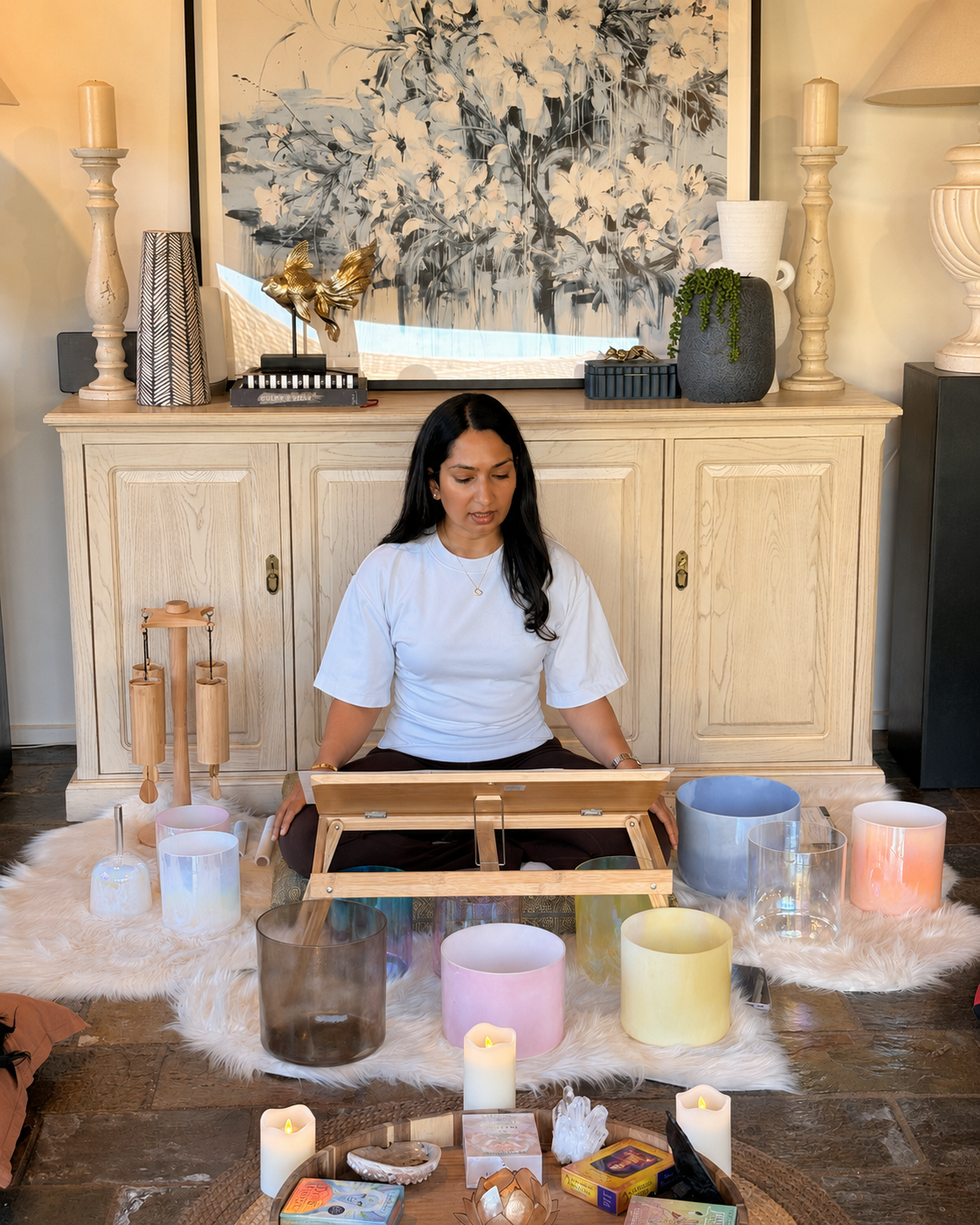
Mindfulness and Self-Compassion
That was the invitation for me.
Not to stop overthinking.
Not to criticise myself for doing it.
Not to turn the overthinking into another problem that needed fixing.
Simply to notice.
To recognise that my mind was trying to help in the only way it knew how.
To thank it for its effort.
And then gently return to this moment.
The breath moving in and out.
The feeling of my feet on the ground.
The sounds around me.
The life that was actually unfolding here and now.
This is where self-compassion becomes so important.
As researcher and self-compassion teacher Kristin Neff reminds us, being human means being imperfect. We all struggle. We all get caught in habits of mind from time to time.
The practice isn't about getting rid of those experiences.
It's about learning to meet them with understanding rather than criticism.
When Strengths Become Shadow Sides
What I've come to understand is that many of our greatest strengths have shadow sides.
The ability to analyse can become overthinking.
The desire to improve can become perfectionism.
The wish to care deeply can become carrying responsibilities that were never ours to hold.
None of these parts need to be eliminated.
They simply need awareness.
When we bring awareness to them, they soften.
When we meet them with compassion, they lose some of their grip.
And when we stop fighting them, we often discover that they settle on their own.
A Gentle Invitation
So if you've ever found yourself replaying a conversation, revisiting a decision, or mentally rewriting something that has already happened, know that you're not alone.
You don't need to become a different person.
You don't need to get rid of the thinking mind.
Perhaps the invitation is simply to notice.
To pause.
To take a breath.
And to gently return to the only place life is ever actually happening.
Right here.
Right now.
You May Also Enjoy
If this reflection resonated with you, you may also enjoy reading:
From Overthinking to Embodiment
Self-Compassion for Women: A Gentle Mindfulness Practice in Glen Iris
Interested in Practising Mindfulness?
Mindfulness isn't about clearing the mind or never having difficult thoughts. It's a practice of gently returning to the present moment, again and again.
At State of Harmony in Glen Iris, Melbourne, we explore mindfulness through meditation, gentle awareness practices, mindful movement, and opportunities for deep rest and reflection.
Whether you're new to meditation or looking to reconnect with your practice, you're warmly welcome to join us.
Ways to Practise with State of Harmony in Glen Iris
Weekly Meditation Circle
A welcoming midweek space to pause, breathe, and cultivate greater awareness through guided mindfulness meditation.
Learn more about Weekly Meditation Circle
Sacred Sunday Women’s Circle
A monthly women's event combining gentle mindful movement, meditation, sound bowls, and reflection. A chance to step away from the busyness of life and reconnect with yourself.
Learn more about Sacred Sunday Immersion
Return to Harmony
A deeply restful experience featuring Yoga Nidra and sound bowls, offering an opportunity to slow down and rest more deeply.
Learn more about Return to Harmony
To learn more or book an upcoming event, visit www.stateofharmony.com.au/events.
With warmth and gratitude,
Sithara Sajeev
Founder, State of Harmony
Acknowledgement of Inspiration
This article was inspired by personal reflection, mindfulness practice, and the teachings of mindfulness and self-compassion teachers including Kristin Neff, whose work explores the importance of meeting ourselves with kindness during moments of struggle.
-
Self-Compassion – Kristin Neff
https://self-compassion.org/what-is-self-compassion/Centre for Clinical Interventions (CCI) – Self-Compassion Resources
https://www.cci.health.wa.gov.au/Resources/Looking-After-Yourself/Self-Compassion