Understanding why progress in meditation isn't always linear, and why that doesn't mean you're doing it wrong.
Have you ever sat down to meditate and wondered whether you're actually getting any better at it?
Perhaps you've been practising meditation for a few weeks, or even months. Some days you feel calm, focused and present. Other days, your mind seems busier than ever. You find yourself distracted, restless or impatient, wondering whether you're making any progress at all.
It's one of the reasons I think meditation can be so difficult to stick with. We're used to seeing progress. But with meditation, progress isn't always so obvious.
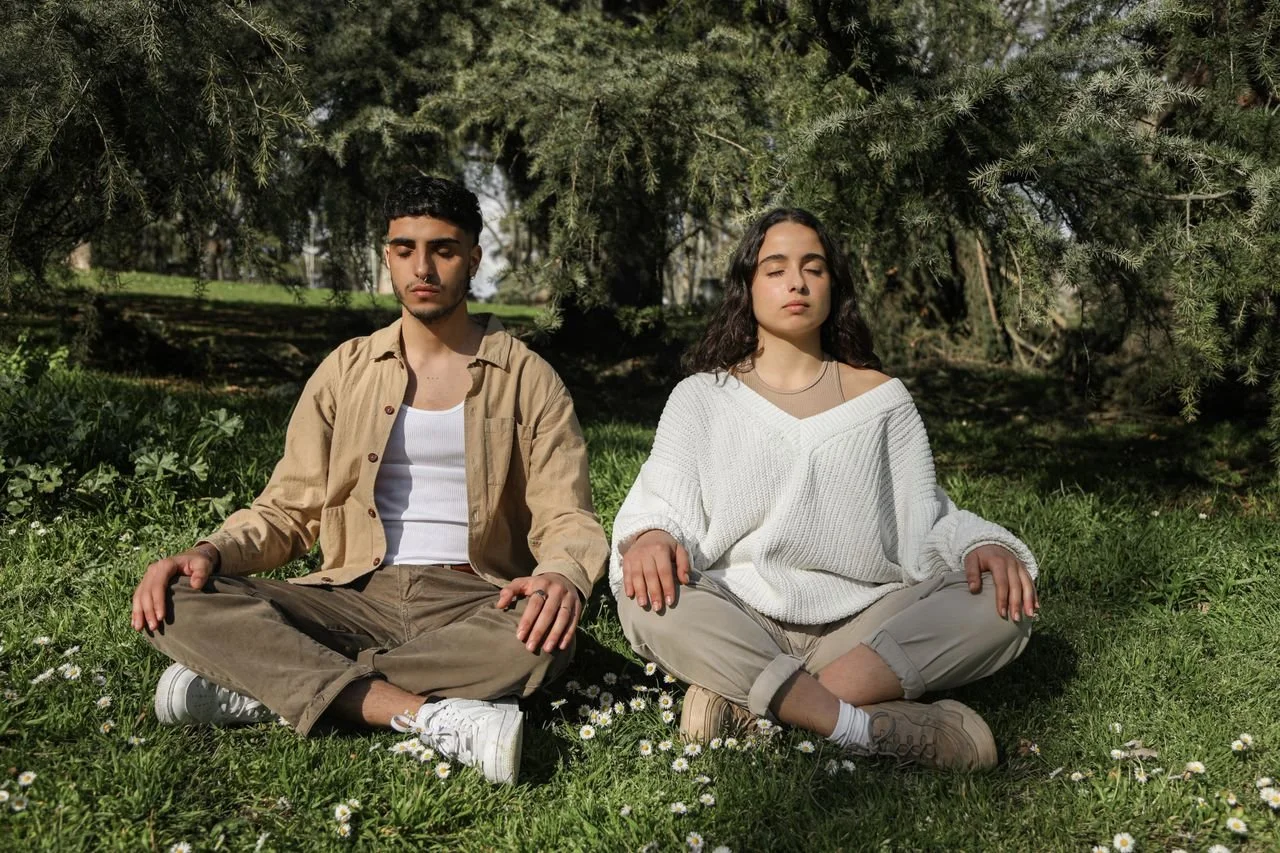
Why Is Meditation Progress Hard to Measure?
Think about physical exercise. When we start a new exercise program, we often have something tangible to work towards. Over time, we might notice that we can lift a heavier weight, walk a little further, hold a position for longer, or complete an exercise that once felt difficult.
Of course, physical progress isn't always linear either. But we often have ways of measuring improvement, and those little milestones can give us a sense of achievement. As a physiotherapist, I've seen how encouraging these changes can be. They help us recognise that our efforts are making a difference.
But meditation doesn't always offer that same reassurance. There's no weight to increase, distance to cover or personal best to achieve. And sometimes, the more we try to measure how well we're meditating, the more frustrated we become.
Why Does Meditation Feel Harder Some Days?
One day, you might sit down to meditate and experience a lovely sense of calm. Your breathing slows, your body relaxes and your thoughts seem to settle. You finish feeling refreshed and think, That was a good meditation.
Then the next day, you sit down and find yourself thinking about everything you need to do. Your mind wanders from one thought to another. You feel restless, distracted and perhaps even a little frustrated. You finish thinking, That wasn't very good. I couldn't concentrate at all.
But was the second meditation really less valuable than the first? Not necessarily.
We often assume that a calm meditation is a successful one and a busy mind means we're doing something wrong. Yet the purpose of mindfulness meditation isn't to stop thinking or achieve a particular state of calm. It's to become more aware of our experience and gradually change how we relate to it.
Some days that experience is peaceful. Other days it's uncomfortable, messy or full of distractions. Both can offer opportunities to practise awareness.
Why Meditation Progress Isn't Always Linear
One of the beautiful, and sometimes frustrating, aspects of meditation is that growth can be subtle. You might not notice much changing during your practice, but perhaps, over time, you begin to notice little differences in everyday life.
You might catch yourself becoming frustrated and recognise what's happening before you react. Perhaps you notice when your thoughts are spiralling into worry, or become more aware of the tension you're carrying in your shoulders or jaw. You might recognise when you're being overly critical of yourself and find a little room for compassion. Or perhaps you still react in a way you wish you hadn't, but you recognise it afterwards and approach yourself with a little more understanding.
These might seem like small changes, but they're meaningful. And they don't necessarily happen in a predictable order. There may be days when you feel more mindful and others when old habits take over. This doesn't erase the awareness you've been developing.
Progress in meditation isn't necessarily about becoming calmer each time you sit. Sometimes it's about becoming more aware of how you're meeting whatever arises.
When Meditation Becomes Another Thing to Achieve
I think this is where meditation challenges us in an interesting way. So much of our everyday lives revolves around achieving, improving and doing more. We measure productivity, fitness, performance and success. We set goals and look for evidence that we're moving forward.
And without realising it, we can bring that same mindset into meditation. We start asking ourselves whether we're getting better, why we can't concentrate, or why we aren't feeling calmer by now. Suddenly, something intended to help us develop awareness becomes another activity we're judging ourselves for.
But what if we approached meditation a little differently? Instead of asking, Was that a good meditation? perhaps we could ask, What did I notice today?
Maybe you noticed how busy your mind was. Maybe you became aware of feeling anxious, tired or impatient. Maybe you recognised how quickly you judged yourself when things didn't go the way you expected. Even noticing that judgement is an act of awareness.
It's something I explored in an earlier reflection, I Teach Mindfulness. I Still Overthink Things, about recognising our patterns of thinking without turning them into another reason to criticise ourselves.
We don't have to turn every meditation into a lesson or an achievement. Sometimes, simply allowing ourselves to be present with our experience, without needing to change it, is enough.
How Do You Know If Meditation Is Working?
Something I often encourage people to remember is that meditation isn't only about what happens during those minutes of practice. It's also about how the qualities we practise might gradually become part of our everyday lives.
Awareness, patience, compassion and the ability to pause and respond rather than immediately react are all qualities we can begin to cultivate through mindfulness meditation. These changes may unfold gradually, and we might not always recognise them as they're happening.
You may still experience stress, difficult emotions or an endlessly busy mind. Meditation doesn't make us immune to life's challenges. But with continued practice, we may begin to relate to those experiences differently. And perhaps that's where some of the most meaningful growth takes place.
A Gentle Reminder for Your Meditation Practice
If you've been meditating and wondering whether you're making progress, remember that you don't need every practice to feel calm or peaceful. Some days meditation may feel easier than others. Some days you may notice very little at all.
You don't have to force an outcome or judge yourself against yesterday's experience. Instead, perhaps we can approach meditation with a little more curiosity, patience and kindness.
Because the real measure of meditation may not be how peaceful we feel while sitting, but how we're learning to meet ourselves and the world around us.
And that kind of growth doesn't always follow a straight line.

Explore Guided Meditation at State of Harmony in Glen Iris, Melbourne
If you've been curious about meditation, or you've tried it before and found it difficult to maintain a regular practice, you're always welcome to join us at State of Harmony.
Our guided meditation sessions offer a gentle, supportive space to explore mindfulness without pressure to perform or achieve anything. Whether you're completely new to meditation or returning to your practice, you're welcome just as you are.
Explore our in-person meditation sessions in Glen Iris, Melbourne, or join us online.
With warmth and gratitude,
Sithara